Free-Roaming Pets: Why Not?
Free-roaming is probably the most painful topic for responsible pet owners, not to mention volunteers.
Imagine: you rescued a kitten or puppy from the street, treated it, fed it, lost sleep at night, found a home for it, and some time later, you receive a message: "Unfortunately, the cat/dog died." This shocking message is normally followed by details of a painful death.
Therefore, while writing this article, the volunteer administrators of CG Stray tried very hard to restrain themselves and avoid using foul language. We really hope this article will help save at least one free-roaming animal. Please protect those you care for!
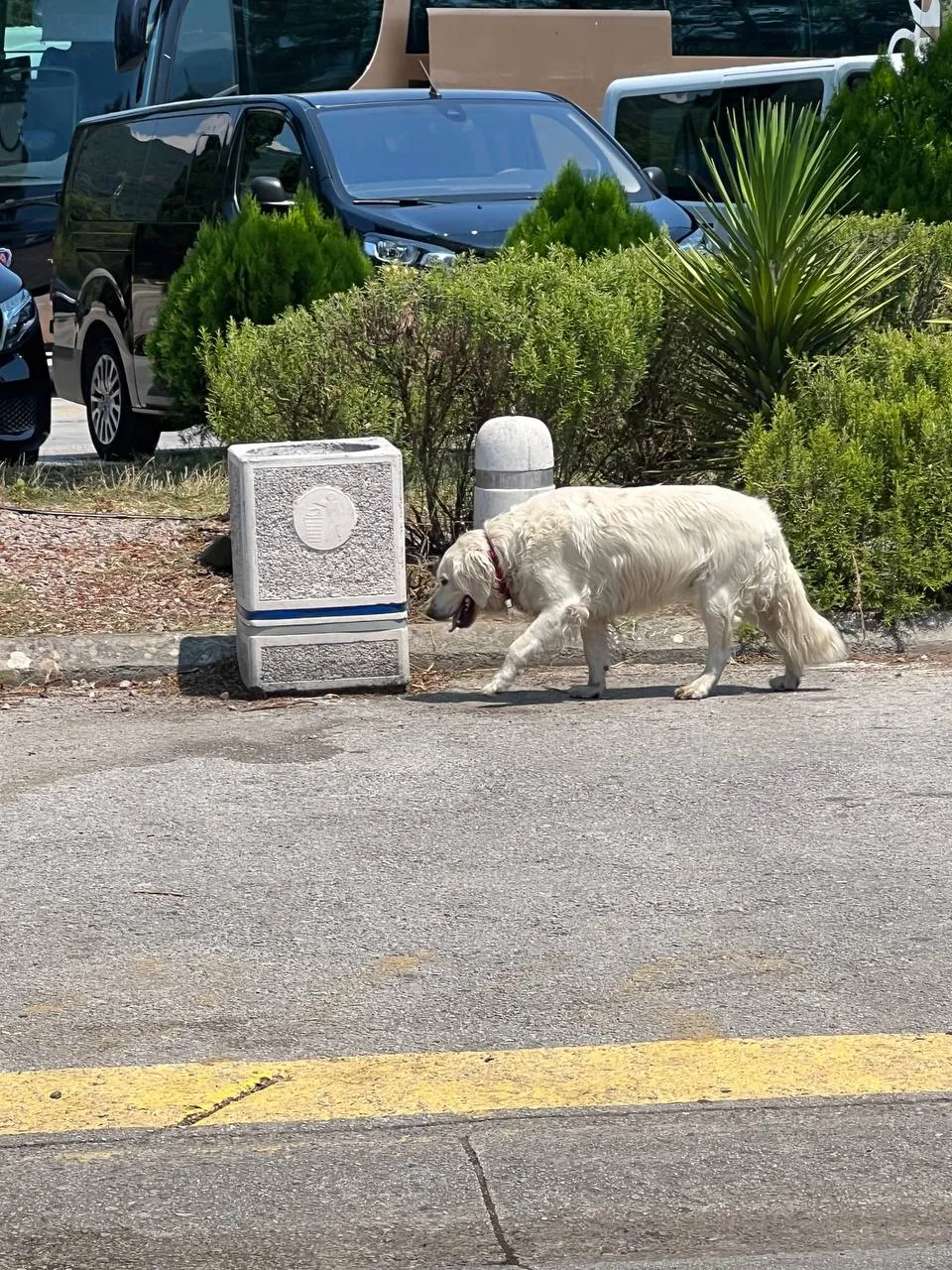
So, why is free-roaming a no go? ⬇️
💀 Free-roaming, especially in Montenegro, equals death. Maybe not today or tomorrow, but the outcome is always tragic. Even if your pet has been roaming freely for several years and nothing has happened to it – that's just luck, and it can end at any moment.
The situation "My cat roams the grounds of a private house and never runs away beyond the gate" also falls under free-roaming – unless the territory is fenced with nets that prevent the animal from going. As a rule, it's not fenced, and then you can find a post in the loc chats along the lines: "Please help find my beloved cat/dog! It disappeared for some reason...".
What can happen to an animal that roams freely?
- 1. If you let an unsterilized, and especially unvaccinated, animal roam freely, you are risking its life daily.
There is a huge number of diseases on the streets of Montenegro that animals can contract. This can lead to suffering, a huge veterinary bill, and death. Animals can get sick not only from their own kind – for example, a cat can eat a mouse and get toxoplasmosis, or even rabies.
An unneutered/unspayed animal can run far from home in a surge of its reproductive instincts. This, in turn, will contribute to the increase in the stray animal population, which is already uncontrollably breeding in the country, and often dies at a young age due to diseases, cars, aggressive dogs, and human cruelty.
❗️Read about the pros, benefits, and myths about the harm of spaying and neutering here.
- 2. A common occurrence in Montenegro is the poisoning of animals on the street. You might think: "Is my pet that stupid to eat poison?!" Well, animal abusers put poison in tasty treats, or a cat might eat a mouse that has been poisoned, so it's not about intelligence. Animals die a slow agonizing death from poisoning, and even quick transportation to a veterinary clinic won't save them.
- 3. In Montenegro, there are local services that capture stray dogs. No one will check if a dog has the owner; it will be taken to "azil" (municipal shelter in Montenegrin), where conditions are far from pleasant, and other dogs – possibly sick ones – are present. Shelters/azils are often overcrowded. Puppies may be deemed "sick" upon intake and euthanized.
- 4. The Montenegrin "polako" (slowly) doesn't work on the road – people drive aggressively in the country, and the result is the corpses of dogs and cats on the roadsides with panoramic views. We think we don't need to describe in detail various injuries and death of animals under the wheels of cars. It happens not only on a busy highway - a small street and a bad driver who won't even think to brake are enough.
- 5. Your animal may become a victim of animal abusers. There have been numerous cases of animal cruelty in the country. Dogs are beaten, raped, have their legs broken, cats are kicked until injured, have their ears cut off, their coat is turned into rugs, kittens are trampled, and their whiskers are set on fire. Sometimes children play with kittens on the street as if they were toys, stretching them by their paws, causing internal injuries. It's painful to think about, hard to believe, but cruelty doesn't live on some separate street where free-roaming animals don't go.
- 6. Your pet could be stolen. It doesn't necessarily have to be a pedigree animal. Then you can spend a long time searching, posting ads all over the city, including all veterinary clinics – where, incidentally, your pet might have been brought just the day before, and the local vet didn't even think to scan for a microchip – this is a real case.
Now let's move on to the myths about letting cats and dogs roam freely.
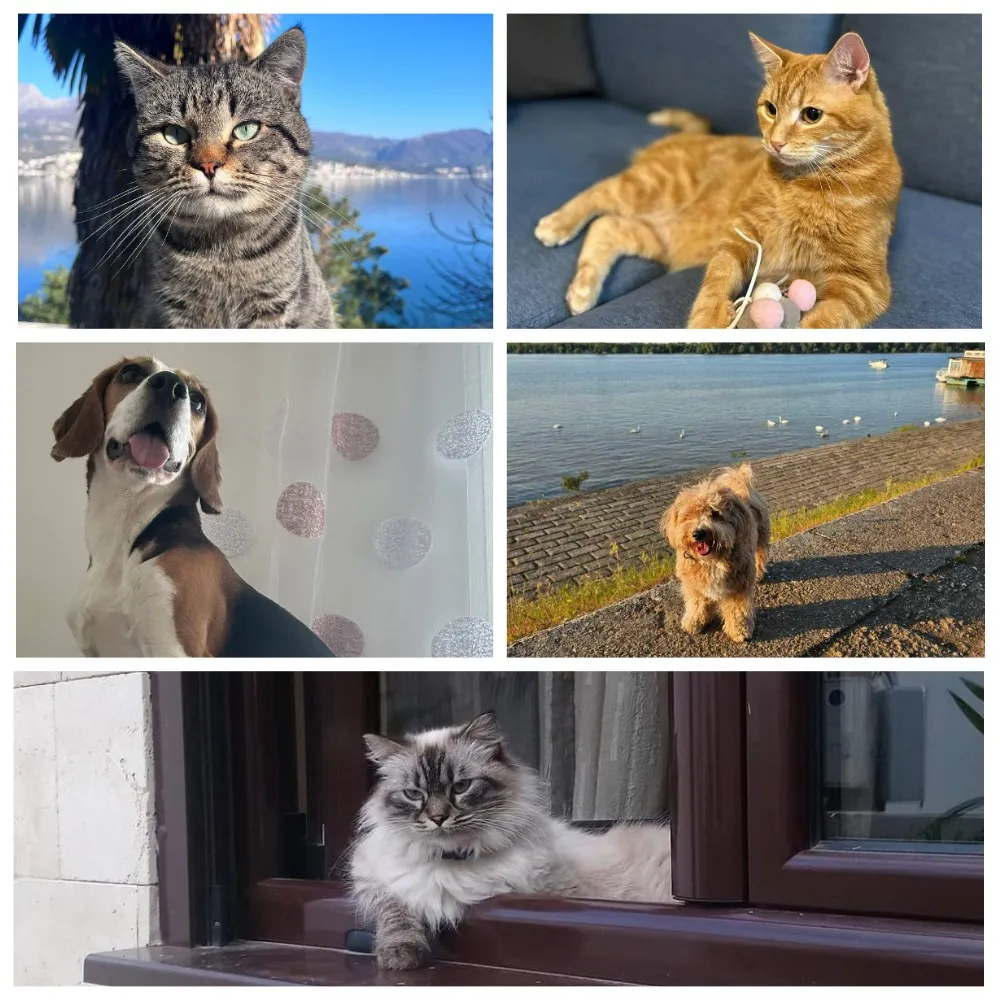
Lost pets, the search notice for which was published in our chat "Animal volunteers of Montenegro" - CG Stray in Telegram
- ❌Myth 1. "Cats need to roam; it's in their nature."
If you were making this claim 10,000 years ago, we'd agree. But cats were domesticated 10,000 years ago, and during that time they have fully adapted to domestic life. The modern world – cities and even villages – has nothing in common with the realities in which wild feline ancestors lived. Today, the street is an extremely dangerous environment for the reasons described above. 👆 - ❌Myth 2. "Free-roaming gives a dog a sense of freedom."
If you don't keep your dog chained in a kennel (i.e. in a confined space, with limited mobility and emotional and intellectual limitations), then the entire argument about the sense of freedom, which is so important to a dog, is unconvincing.
A dog needs a sense of belonging to a pack (in this case, your family!). A dog, even if it's a mix of an Alabai and a Caucasian Shepherd Dog, capable of terrifying all the wolves and thugs in the area, needs care and love, stability, and predictability. It's important for a dog to know: this is home, this is the owner, this is the food bowl, this is my place in the house, this is my place in the pack. Working dogs also need "self-realization." A sense of freedom for a dog is too abstract a feeling, a human one, which people attribute to the animal. - ❌Myth 3. "The cat/dog is bored and cramped in the apartment; it wants to go outside." Or, "It's already used to living on the street and now, after being taken in, wants to go back."
Believe us, volunteers have found a home for a huge number of stray animals, including those picked up from the street as adults. They all experienced the delights and horrors of street life and, after being taken in, didn't even think about wanting to go back to the street – if they were cared for and given attention at home.
A cat or dog is definitely not a cactus in a pot that you can water once a week and forget about for a while. If a pet wants to go outside, the reason might be a lack of toys, insufficient attention and time spent with the owner, or an improperly arranged living space. All of this can be discussed and resolved with a zoopsychologist and/or a canine behaviorist. - • If you give a dog intellectual and physical exercise, it will spend most of its time in the apartment sleeping. And a sleeping dog doesn't take up that much space.
- • For cats, you can diversify the space in the apartment: hang shelves, put up a play complex, get interactive toys. Believe me, all this will be more interesting than the street.
- • It's recommended to play with cats twice a day, for at least 15 minutes at a time. And if you have more than one cat, multiply the playtime by the number of cats :) Diversify the games and allow your pets to avoid boredom and exercise their hunting skills at home, safely!
- ❌Myth 4. "A dog doesn't belong in a house or apartment."
If you live in the 19th century, then perhaps, yes. But then the dog is not a friend to you, but a kind of living tool, livestock. If you're a peasant, the dog guards your yard; if you're a nobleman, you might have a kennel, pedigree hounds/setters/greyhounds (which you sometimes bring into the house to show off to friends, neighbors, and other hunters) and special people who take care of the dogs.
The lack of running water, shampoos, parasite treatments, rabies vaccines, and other diseases in the past were serious arguments against bringing a dog into the house. Exceptions were made for small dogs keeping lonely ladies company. - ❌Myth 5. "Cats always find their way home."
In fact, we have to disappoint you here as well.
In a stressful situation, due to shock or injury, a domestic cat on the street may lose its spatial orientation, run far away, or simply hide in a place it considers safe and not come out for a long time. - ❌Myth 6: "If you put a collar on it, especially a GPS tracker or address tag, nothing will happen to the pet."
Again, no! No precautions can guarantee the safety of an animal while free-roaming. We return to the list of dangers on the street that we discussed at the beginning: cars, animal abusers, other sick animals, injuries, poison… A GPS tracker won't save it from them. - ❌Myth 7: "The cat or dog has fun on the street; it needs to socialize with its kind."
Pets' "socialization" with other animals on the street can turn into a fight for territory and resources, resulting in infection with various diseases and various injuries.
Or, yes, the animal might have fun "hanging out" with others on the street, in a burst of "fun" it might climb somewhere it shouldn't, eat something it shouldn't, and then the owner will have the fun.
Rule 1: Free-roaming and a domestic pet are incompatible.
Rule 2: You need to engage with your pet.
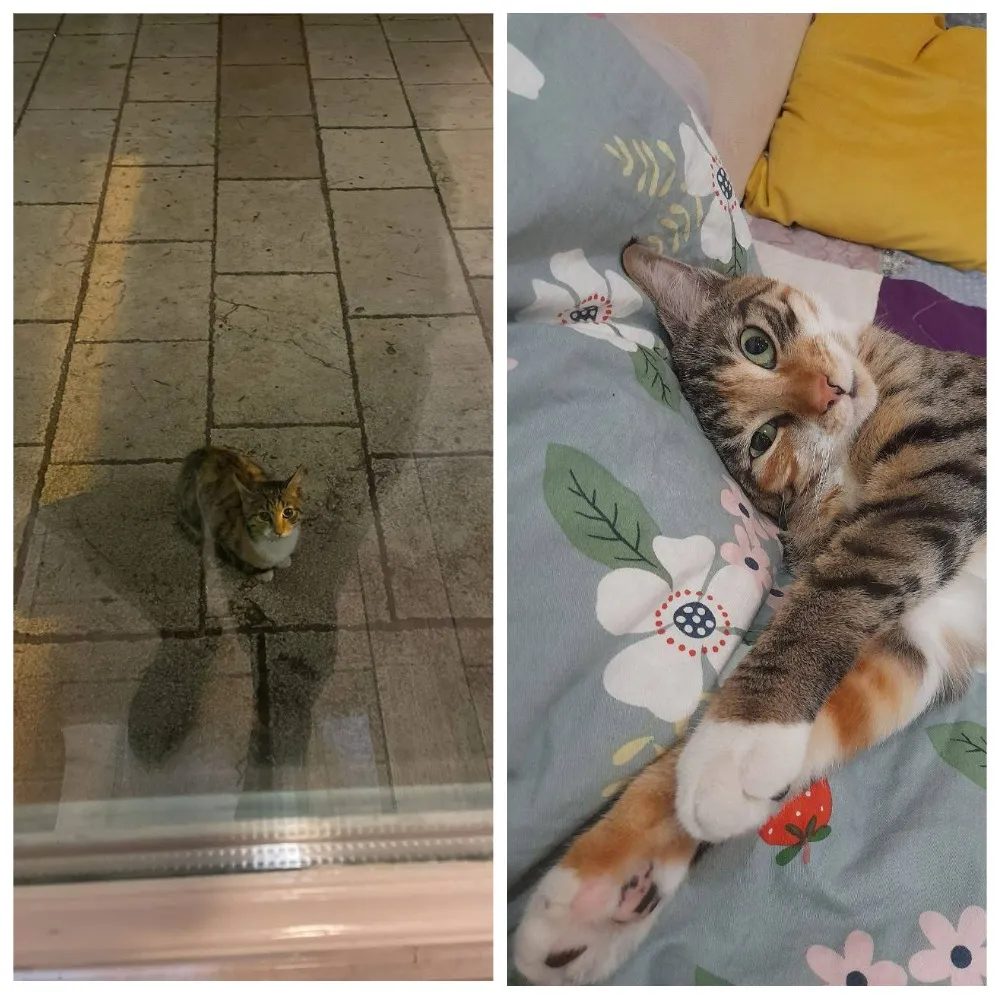
This is Asya. Asenka saw the goal (getting a home and a human) and saw no obstacles. She firmly pursued this goal, chose a suitable candidate, and looked at him like that cat from Shrek.
Let's rejoice for Asya and her correct goal-setting, because now she has a pillow with flowers and no desire to return to the street!
You need to take care of your pet.
Vaccinations and treatments according to schedule are not a whim but care for the safety of the animal and its owner.
Rule 4: The owner is the pet's best friend.
Cats and dogs need to socialize with YOU, not with their own kind, and if you believe they should have a friend of their own kind, then get one for them – another domestic pet!
Conclusion
If your animal is already free-roaming and has been lucky enough to stay alive to this day, it's time to responsibly approach its care, engage with it daily, and thereby ensure it has a long and happy life!