How to catch a stray cat?
If you decide to help a stray animal and get it spayed or neutered, you will need to catch it first. Here is how to catch a stray cat safely — for the cat and for you.
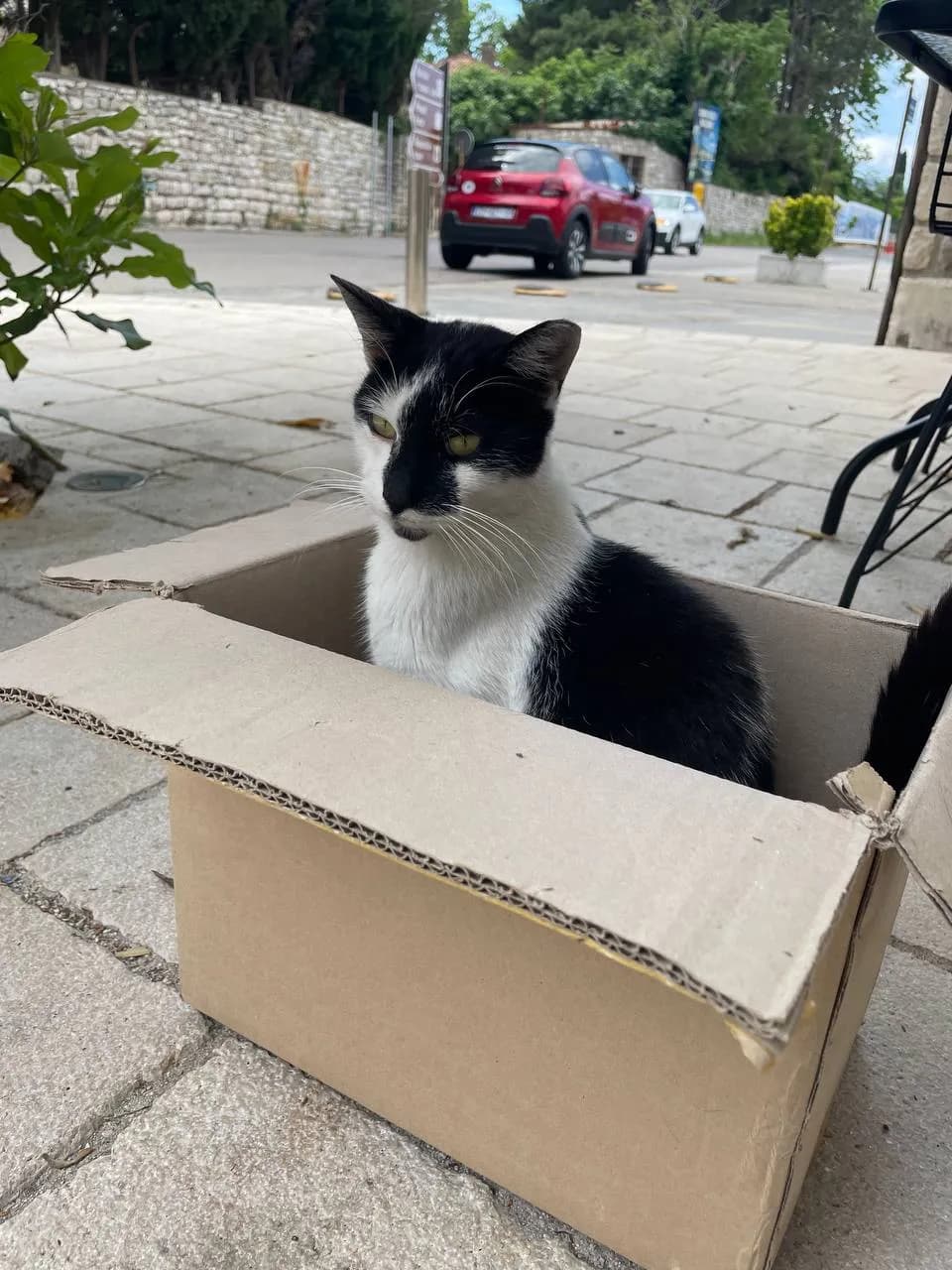
In theory even a child knows what to do: put a box out, cats love boxes. Done. You are a hero!
(It would be wonderful, of course, if street-wise suspicious cats were that easy.)
In practice, the method depends on the cat’s character and how socialized it is.
By the amount of stress for the animal, methods can be split into more aggressive ones (a blanket, a fishing net) and those with relatively less stress (a cat trap or a carrier).
If the cat comes to you and is clearly friendly, you may be able to pick it up with your hands. Even then, putting it into a carrier can go wrong. It is best to place the cat into a vertically standing carrier, rear end first, holding the scruff of the neck.
Fearful, cautious cats that keep their distance are much harder. It is also important to tell a potentially aggressive animal from one that is only scared.
❗️ Important, even if the cat is friendly: when handling stray animals, use disposable medical gloves to protect yourself from possible diseases, and/or thick leather welding/work gloves — volunteers find them practical for catching.
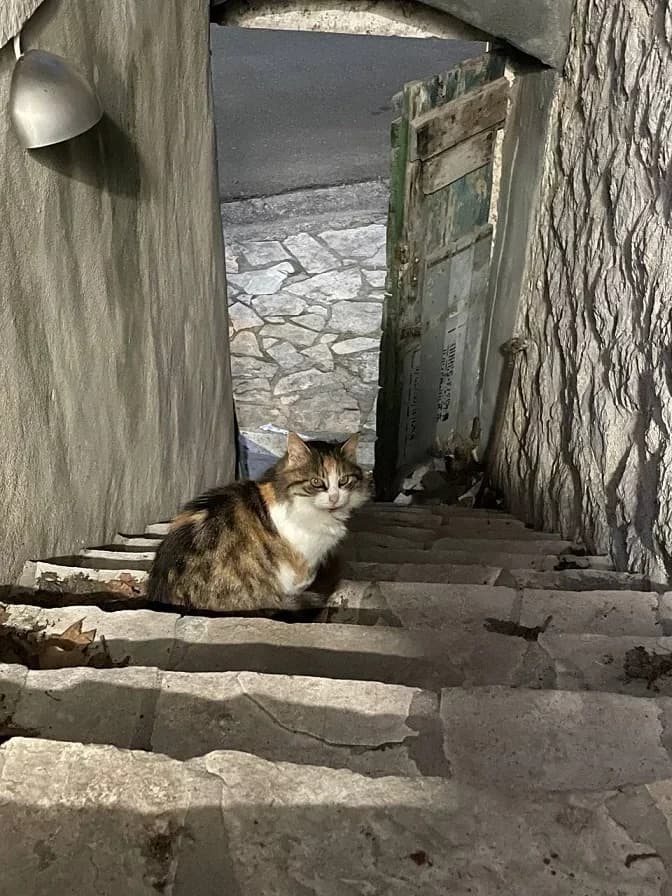
One of our heroines has a face with subtitles, as people say on Instagram. Asked whether she wants to be caught, she answers in capital letters.
Can every cat be caught, and who should not be caught?
Trap–neuter–vaccinate–return (TNVR) works well to improve the situation with stray animals. The more street animals go through TNVR thanks to volunteers and charities, the more effective the work is. There are still a few exceptions a beginner should keep in mind.
- 1) Cats that roam freely may still be someone’s pets, even if they are at high risk. Not all of them wear collars, so ask neighbours whether the cat belongs to someone before reaching for a trap.
If the animal looks neglected but nominally has an owner, you may still consider a “quiet” spay/neuter, weighing all circumstances. - 2) A cat with signs of rabies (aggression, drooling, seizures, paralysis, etc.) must be taken off the street, BUT not by you. Contact the stray animal capture service / municipal police, describing the symptoms, appearance and exact address.
- 3) Some cats have adapted so well to street life that they behave like wild relatives: very cautious, they hide and run at the slightest threat. They are still worth catching to sterilize, vaccinate and release, but it is genuinely hard and needs thorough preparation.

A trap in action
What do I need to catch a cat myself?
1. A cat trap.
A special trap with a door that closes firmly. The ideal option. In Montenegro such traps can be borrowed from clinics that work with Kotor Kitties or from more experienced volunteers. You can write in this topic in the Montenegro animal volunteers chat on Telegram and ask if anyone has a free trap for a while.2. A carrier.
You need a solid plastic carrier with a removable lid and a metal door.
First, the door lets you use it like a trap.
Second, the material is easy to disinfect.
Third, the removable lid lets the vet take out a highly stressed cat as carefully as possible.3. Strong-smelling, tasty food.
Used as bait and positive motivation. Sometimes a little valerian or a catnip spray helps.4. A plastic bowl.
Wet food used as bait should not be placed directly on the ground.5. Time and patience.
Be ready for the catching and everything that follows to take a whole day. With a smart approach it can take time, but the chance of success is higher, and that is better for the animal. Besides catching, set aside a few days to help a frightened animal settle.
How to catch a cat on the street?
The gentlest way for the cat, which needs patience and time is to earn its trust and offer good conditions. The easiest start is feeding in the morning and/or evening. At first leave food (pick one type and do not change it) not far from the cat’s shelter and step away. With each feeding, reduce the distance a little. You can talk softly while feeding — the cat may learn to recognize your voice.
✅ Later, when the cat is no longer panicking and lets you closer, offer food inside the carrier.
This stage also takes several feedings: first the food almost on the threshold, then move the bowl deeper. When you can close the door quickly without the cat slipping out — it is time. A miss will cost you the cat’s trust and you will start over, so do not rush. This method works if you have no trap.
✅ If you have a trap, put the bowl deep inside and make a small trail of food toward it. The cat must step on the pedal, so the bowl has to be far enough in. If the cat will not go in at all, use the carrier method first so it gets used to eating in a confined space.

The same cat from the stairs. And yes, the same look.
✅If the first two methods fail but the cat does not panic at the sight of a carrier/trap, a dog-style cage may work.
Inside a trap or carrier the space is tight, so the cat may refuse to enter. A cage is more spacious. The method is the same as with a carrier, but at the key moment you slam the door. Tie a rope to the door and run it through the bars toward where you wait. The door should be open by about 1/3, and the cage must stand on a flat surface so the door does not close or swing wide on its own.
❗️Pay special attention when moving the cat from a trap/cage into a carrier and back if needed.
❗️After the cat is in the cage/trap/carrier, cover it with a sheet — the cat feels calmer.

You will help the cat a lot if you cover the carrier or trap with a cloth.
The methods above are relatively safer for the cat’s mind, though catching is still a huge stress.
Important: rough catching, described below, is in our experience enormous stress for cats and badly damages the little trust they have in people. Socializing such animals later takes a lot of time. Try not to use aggressive methods unless you really have to.
If the methods above fail, you can use a fishing net or a blanket.

Sometimes a net is also used to take a cat to the clinic if there is no other way.
- ✅Fishing net
This works if the cat comes for treats and lets you within about 2 metres. Drop the net over the cat while it is eating: hold the net on an outstretched arm exactly above the cat and lower it fast, pressing it firmly to the ground.
Then step on the edges so the cat cannot get out. For the first minutes the cat will panic, then it will calm a little.
Prepare the carrier before catching and keep it next to you.
When the cat calms a bit, grab the scruff through the net (gloves help), hold firmly with one hand, stand the carrier vertically with the other, put the cat in rear-end first, and close the door quickly. - ✅Blanket / towel
This is very stressful. Use it only if other methods failed and catching cannot wait.
You need a thick large towel / small blanket / throw and an old pillowcase. Wear closed clothes and thick gloves. Try to corner the cat. If you cannot, several people should stand around it, or at least on two opposite sides.
Keep the towel ready, with the fabric at the cat’s height to block escape. One person makes a loud sound or sudden movement. The cat will usually run the other way, and you can catch it. As it runs, meet it and throw the towel/blanket over it. Press the fabric to the cat’s body and to the ground. The second person can reach you. Carefully lift the animal into the pillowcase. You get a practical, fully closed bag for carrying. - What next, once the cat is caught?
Take it to a vet clinic after booking an appointment (this is especially important if you plan sterilization through the Kotor Kitties programme).